Recently, the research group of Professor Li Baoju at the Institute of Vegetables and Flowers, Chinese Academy of Agricultural Sciences, published an article titled "Polydopamine nanocoating on biocontrol bacteria enables enhanced environmental resilience and agricultural performance" in Chemical Engineering Journal (IF: 12.5). The study uses dopamine self-polymerization to construct a polydopamine (PDA) nanocoating on the surface of Bacillus subtilis ZF71, effectively equipping the biocontrol bacterium with a "nano-armor" that significantly improves its stress tolerance and disease control efficacy in the field.
Bacillus subtilis is a commonly used biocontrol bacterium in agriculture, capable of effectively inhibiting a variety of plant pathogens. However, the field application of live microbial agents faces a long-standing challenge — poor environmental adaptability. Factors such as UV irradiation, rain wash-off, and oxidative stress often lead to low survival rates and short persistence of biocontrol bacteria in the field. How to make biocontrol bacteria "survive, adhere, and perform" in complex field environments is a critical bottleneck that urgently needs to be overcome.
Core technology: equipping biocontrol bacteria with a "nano-armor"
The research team exploited the self-polymerization of dopamine under mild alkaline conditions to form a uniform PDA nanocoating on individual ZF71 cells (Fig. 1a). This single-cell coating strategy differs fundamentally from traditional microencapsulation — the latter traps multiple cells inside microspheres, whereas the PDA coating used in this study wraps around each bacterial cell individually, preserving the cellular individuality and surface functionality, thus maintaining high adaptability in diverse environments.
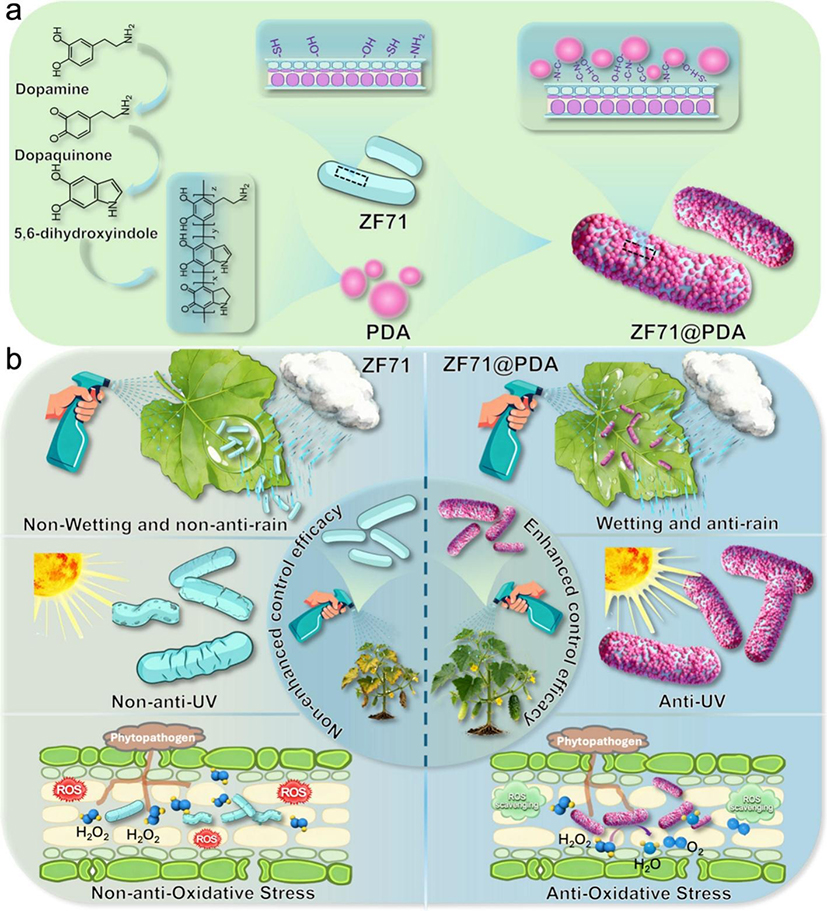
Fig. 1. Schematic illustration of the preparation process of ZF71@PDA single-cell nanocoating.
Performance enhancement: multi-faceted improvement of stress tolerance
The research team confirmed successful PDA coating on ZF71 surfaces using scanning electron microscopy, Raman spectroscopy, and other techniques. The PDA coating is rich in catechol groups, which can form strong bonds with plant leaf surfaces through hydrogen bonding and π–π stacking interactions. After simulated rain wash-off, the number of ZF71@PDA colonies retained on leaves was approximately 10-fold higher than that of uncoated ZF71. This means that the "nano-armored" biocontrol bacteria can better "stand firm" and resist being washed away by rain. UV radiation is a major killer of biocontrol bacteria in the field, but PDA itself exhibits excellent UV absorption capability. After UV exposure, the mortality rate of ZF71 reached 46.59%, whereas that of ZF71@PDA was only 13.10%. PDA also possesses outstanding free-radical scavenging activity. Under H₂O₂-induced oxidative stress, the surviving cell count of ZF71@PDA reached 3.59×10⁸ CFU/mL, compared to only 2.51×10⁷ CFU/mL for ZF71.
Pot-based biocontrol assays (Fig. 2) showed that at a concentration of 1×10⁸ CFU/mL, ZF71@PDA achieved 69.31% control efficacy against cucumber downy mildew, approaching the efficacy of the chemical fungicide chlorothalonil (70.64%) (Fig. 2h). A similar significant enhancement was also observed against Corynespora leaf spot. Moreover, ZF71@PDA treatment significantly promoted cucumber growth — physiological parameters including chlorophyll content, plant height, and leaf area were all significantly improved compared to the ZF71-reated group, and were comparable to those of healthy cucumber controls.
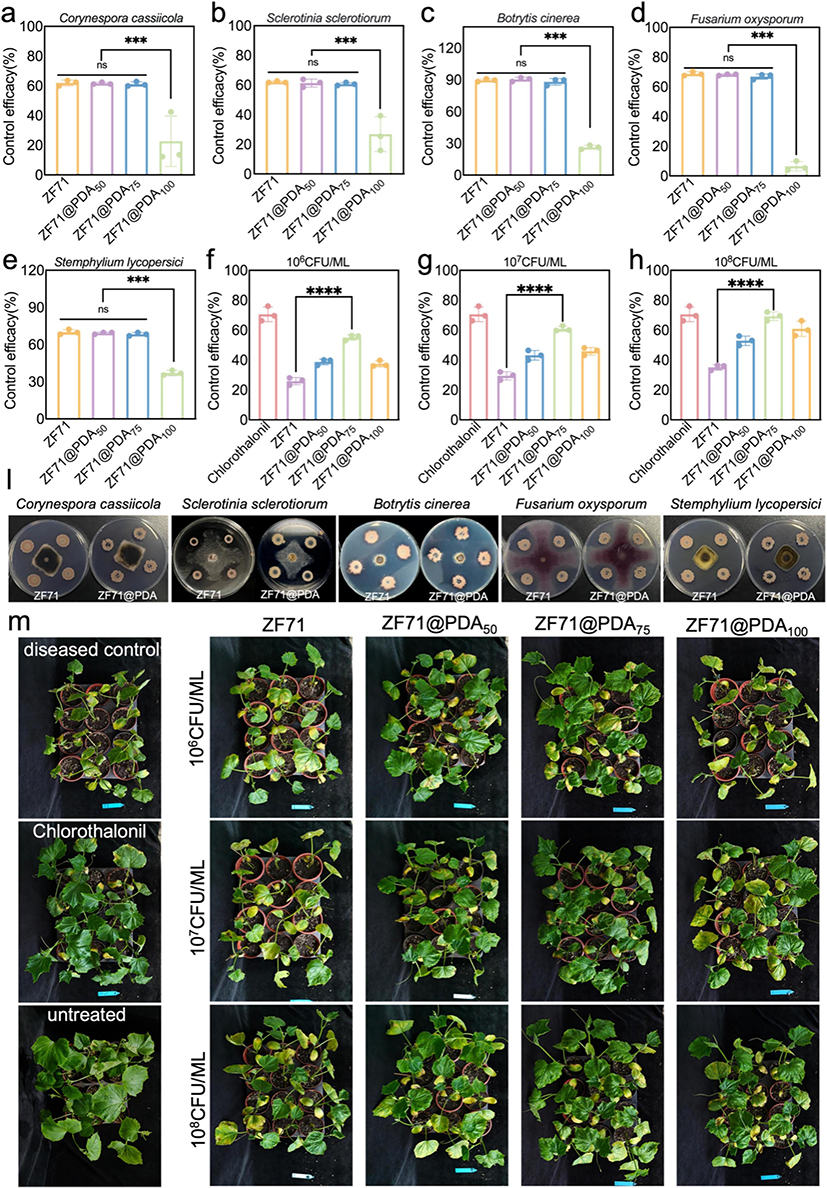
Fig. 2. Biological activity evaluation of ZF71@PDA.
This study provides a systematic validation of single-cell surface nanocoating technology in agricultural biocontrol bacteria, successfully integrating materials science with plant protection. The strategy offers a new approach to overcoming the long-standing bottleneck of poor field stability of biocontrol agents, and holds significant theoretical and applied value for promoting green agriculture and sustainable plant protection.
The Institute of Vegetables and Flowers, Chinese Academy of Agricultural Sciences, is the first affiliation of this work. Professor Li Baoju and Professor Tengfei Fan are the corresponding authors, and Ph.D. student Yaqiang Wang is the first author. This work was supported by the Key R&D Program of Shandong Province, China (2023CXPT071). Original article link: https://www.sciencedirect.com/science/article/pii/S1385894726073560?dgcid=author

 Chinese