Recently, Prof. Zhang Shengping’s team published online a research paper entitled “The Ethylene-Responsive Transcription Factor CsESR1 Positively Regulates Cucumber Trichomes” in Horticulture Research(IF=9.5, Q1). Through map-based cloning, the study identified a novel gene, CsGL2, that controls cucumber trichome development; this gene encodes the ethylene-responsive transcription factor ESR1. The study clarified the regulatory network between CsGL2 and the glabrous mutant genes CsGL1 and CsGL3, providing a new theoretical basis for elucidating the molecular regulatory mechanism of cucumber trichome development.
Cucumber is a major vegetable in China, ranking first in the world in both cultivation area and yield. Spines and trichomes are specialized structures on the cucumber fruit epidermis that directly determine fruit appearance quality and commercial value, making them core agronomic traits in cucumber breeding. Plant trichomes help plants resist adverse stresses such as ultraviolet radiation, extreme temperatures, and insect feeding, serving as an important protective barrier for plants to adapt to the external environment.
The research team previously preliminarily mapped the cucumber glabrous gene CsGL2 to chromosome 2. In this study, using an expanded F2 segregating population, CsGL2 was fine-mapped to a 72.5 kb interval. By combining genomic sequence differences, germplasm variation analysis, and gene expression pattern screening, the ethylene-responsive transcription factor-encoding gene CsESR1 was identified as the candidate gene for CsGL2. Using CRISPR/Cas9 gene editing technology to knock out this gene, the obtained edited mutants showed a phenotype completely consistent with that of the Csgl2 mutant, confirming that CsESR1 is the functional gene regulating cucumber trichome development.
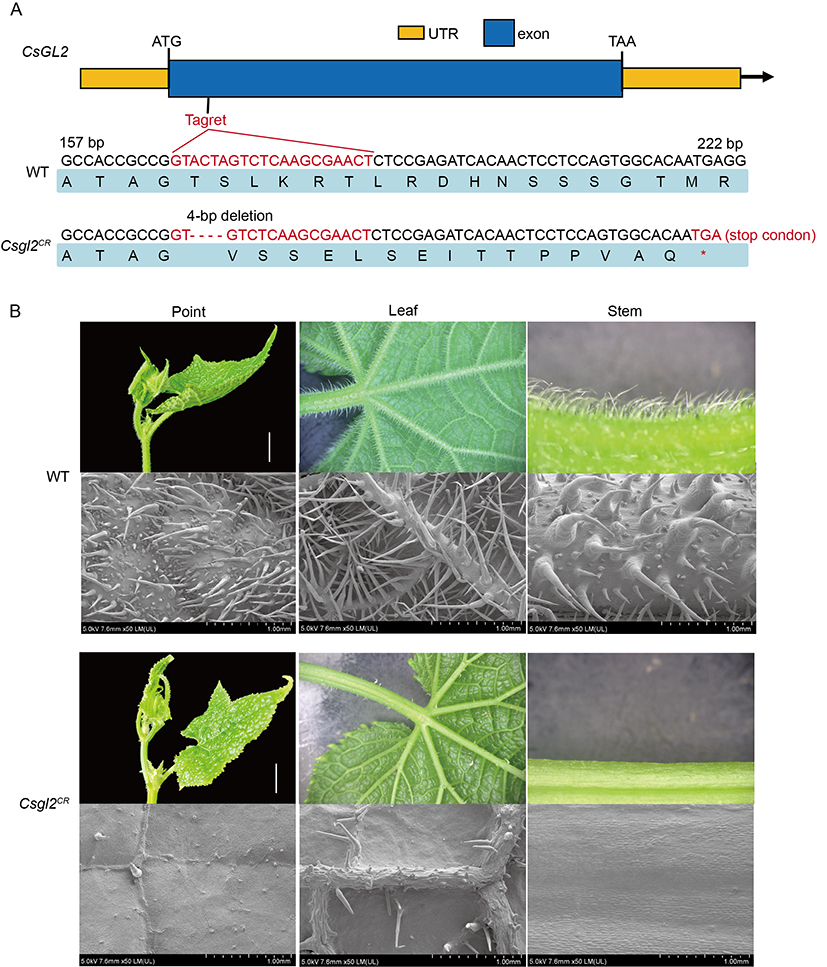
Figure 1 Validation of the biological function of the CsGL2 gene by gene editing
They further dissected the molecular regulatory pathway and genetic network of CsGL2. Results from yeast one-hybrid (Y1H), electrophoretic mobility shift assay (EMSA), and dual-luciferase assays showed that CsGL2 can directly bind to the promoter region of the downstream key gene CsGL1 and positively activate its expression. The CsGL1 protein can directly interact with the CsGL3 protein to regulate the differentiation and development of cucumber trichomes. Genetic epistasis analysis indicated that CsGL3 exerts epistatic regulatory effects on both CsGL1 and CsGL2, clarifying the hierarchical regulatory relationship among the three genes in the genetic pathway.
This study revealed that the ethylene-responsive transcription factor CsESR1 (CsGL2) participates in regulating cucumber trichome development, refined the molecular regulatory network underlying cucumber trichome and fruit spine formation, and filled the research gap regarding the involvement of ethylene-responsive factors in regulating epidermis development in cucurbits. These findings not only enrich the molecular theoretical system of plant trichome development but also provide new gene targets and theoretical support for molecular precision breeding of high-quality cucumbers.
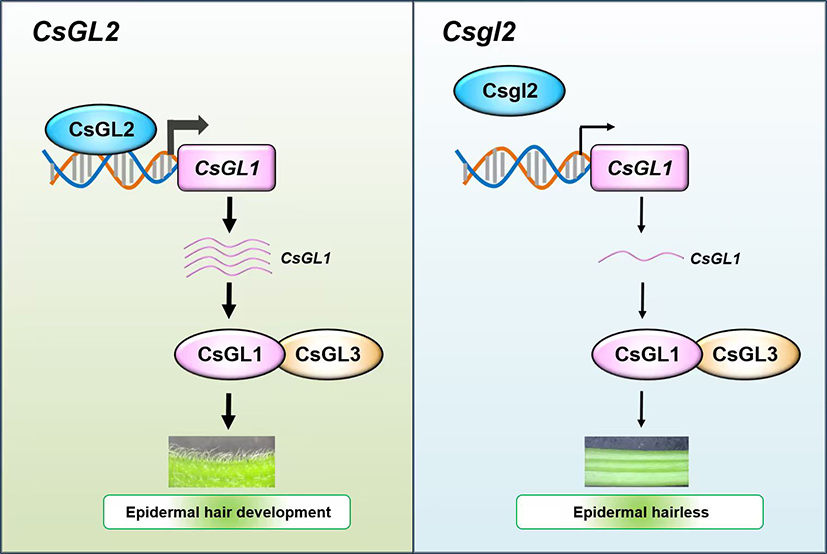
Figure 2 Working model of CsGL2 in regulating cucumber trichome development
The Institute of Vegetables and Flowers, Chinese Academy of Agricultural Sciences, is the first completing institution of the paper. Researcher Zhang Shengping and Researcher Miao Han are the co-corresponding authors. Doctor Liu Xiaoping and Associate Researcher Dong Shaoyun are the co-first authors of the paper. The research was supported by the Earmarked Fund for Modern Agro-industry Technology Research System, the Agricultural Science and Technology Innovation Program of the Chinese Academy of Agricultural Sciences. Associate professor Pan Jian from Shenyang Agricultural University provided important guidance for this paper.
Link to this papar:https://doi.org/10.1093/hr/uhag350

 Chinese